The GBA-ASEAN Initiative (GAI), proposed by the UN Sustainable Development Solutions Network (SDSN), is an action-oriented program to strengthen trade, finance, technology, and policy linkages between the Greater Bay Area of China (GBA) and the Association of Southeast Asian Nations (ASEAN).
In the rapidly shifting global economic landscape, the dynamic economies of Asia must deepen their regional integration and trade to achieve continued rapid economic growth, technological innovation, and environmental sustainability.
China and ASEAN are strong trading partners within the Regional Comprehensive Economic Partnership (RCEP) and strong investment partners in the Belt and Road Initiative. This proposal aims to deepen those relationships for the mutual benefit of China, ASEAN, and the rest of the world economy.
Why GAI
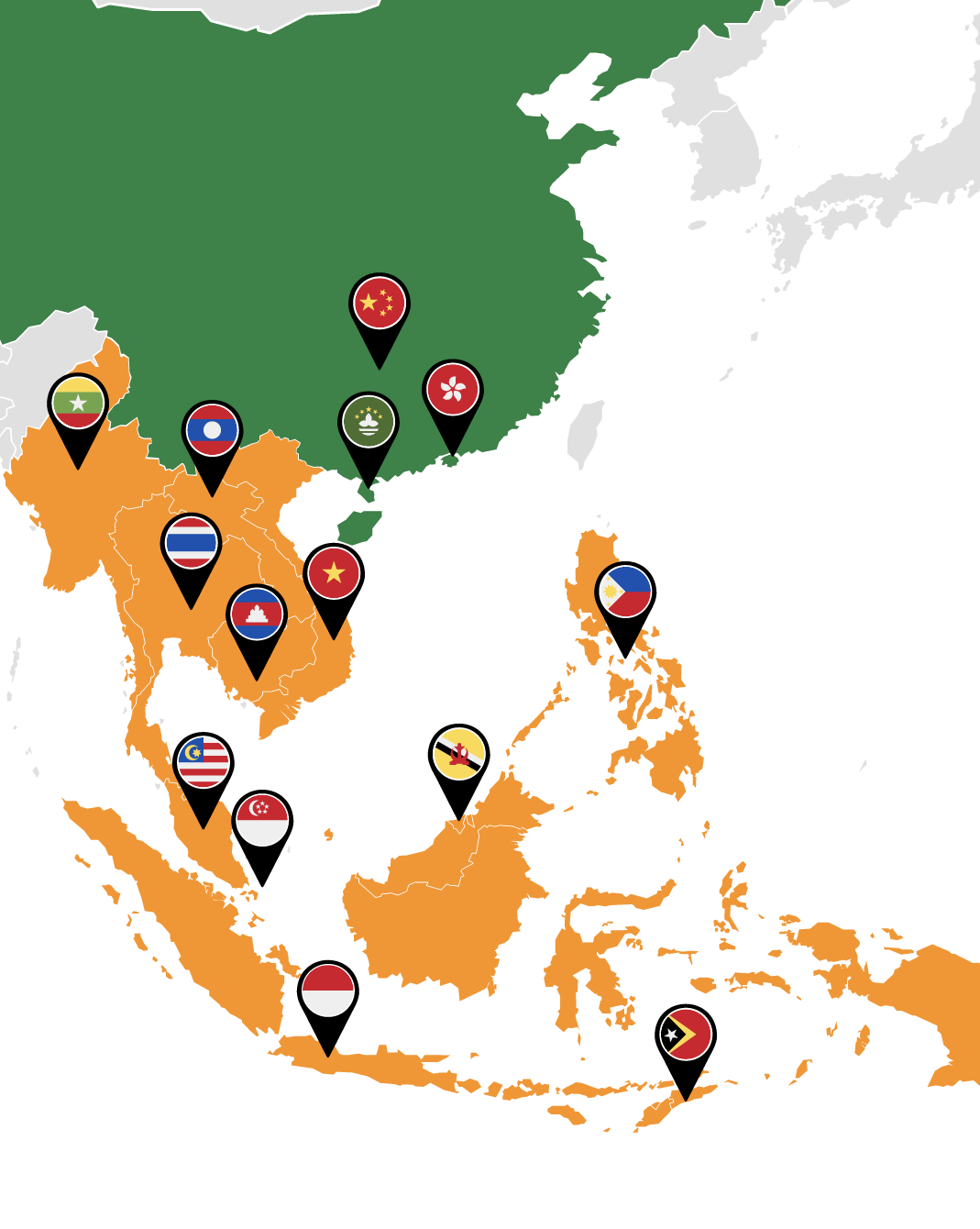
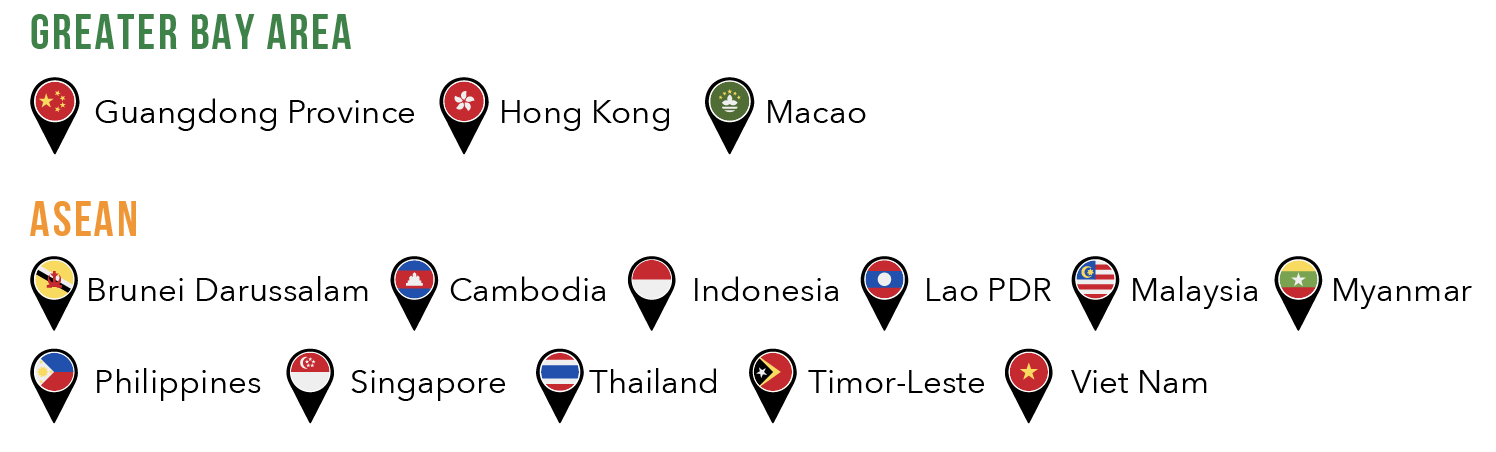
The Greater Bay Area of China (GBA), including Hong Kong, Macao, and the nine major cities of Guangdong, constitutes one of the world's great growth poles, and a crucial partner for ASEAN.
GBA hosts a unique combination of world leaders in international finance, cutting-edge technology, and advanced manufacturing facilities. With its 86 million citizens, an integrated GBA will profoundly benefit all of China and China's trade and finance partners in ASEAN.
A strong GBA-ASEAN partnership, building linkages through trade, technology, production, finance, culture, tourism, and higher education, will support the rapid development of the 10 countries of ASEAN and its 700 million population. In turn, the strong trade, finance, and production relations with ASEAN will be a major spur for the continued rapid growth of the GBA and China.
The GBA-ASEAN Initiative (GAI) will thus serve as a vehicle to support the rapid sustainable development of the RCEP region overall, with benefits extending not only to China and ASEAN but to the other RCEP members, including Japan, Korea, Australia, and New Zealand.

Four Pillars of GAI
The GBA-ASEAN Initiative advances regional collaboration through four pillars focused on building networks, fostering leadership, producing policy research, and convening high-level conferences.

-
The GBA-ASEAN Network brings together leading academic institutions, research organizations, businesses, and other partners across the Greater Bay Area, ASEAN, and the wider SDSN network. Through joint research, workshops, conferences, and knowledge exchange, the Network strengthens collaboration and builds lasting institutional connections across the region.
-
The GBA-ASEAN Leadership Council brings together distinguished leaders from academia, business, finance, and regional institutions across the Greater Bay Area and ASEAN. The Council serves in an advisory capacity to the GBA-ASEAN Initiative, providing strategic guidance and helping strengthen regional partnerships and collaboration.
Grace Fung Oei — Chairman, Ronald McDonald House Charities, Hong Kong
Chavalit Frederick (Fred) Tsao — Chairman, TPC
Alan Chan — President, Singapore Management University
Charles Chia — CEO, Hong Kong–ASEAN Foundation
Daniel Fung — Vice Chairman, Financial Services Development Council Hong Kong
Xiao Geng — Associate Dean, Institute for International Affairs (IIA) Qianhai, CUHK Shenzhen
Sun Sun Lim — Vice President (Partnerships and Engagement), Singapore Management University
Zhao Changwen — Professor, Sun Yat-sen University
Lili Yan Ing — Secretary General, International Economic Association (IEA); Lead Advisor (Southeast Asia Region), Economic Research Institute for ASEAN and East Asia (ERIA)
-
GAI conducts policy-focused research to support sustainable development and deeper regional integration across the GBA and ASEAN. Current areas of work include sustainable development, energy transition, financial innovation and integration, industrial policy, and happiness and well-being. Research outputs include reports, policy briefs, technical analysis, and other resources designed to translate evidence into actionable recommendations for regional policymakers and partners.
-
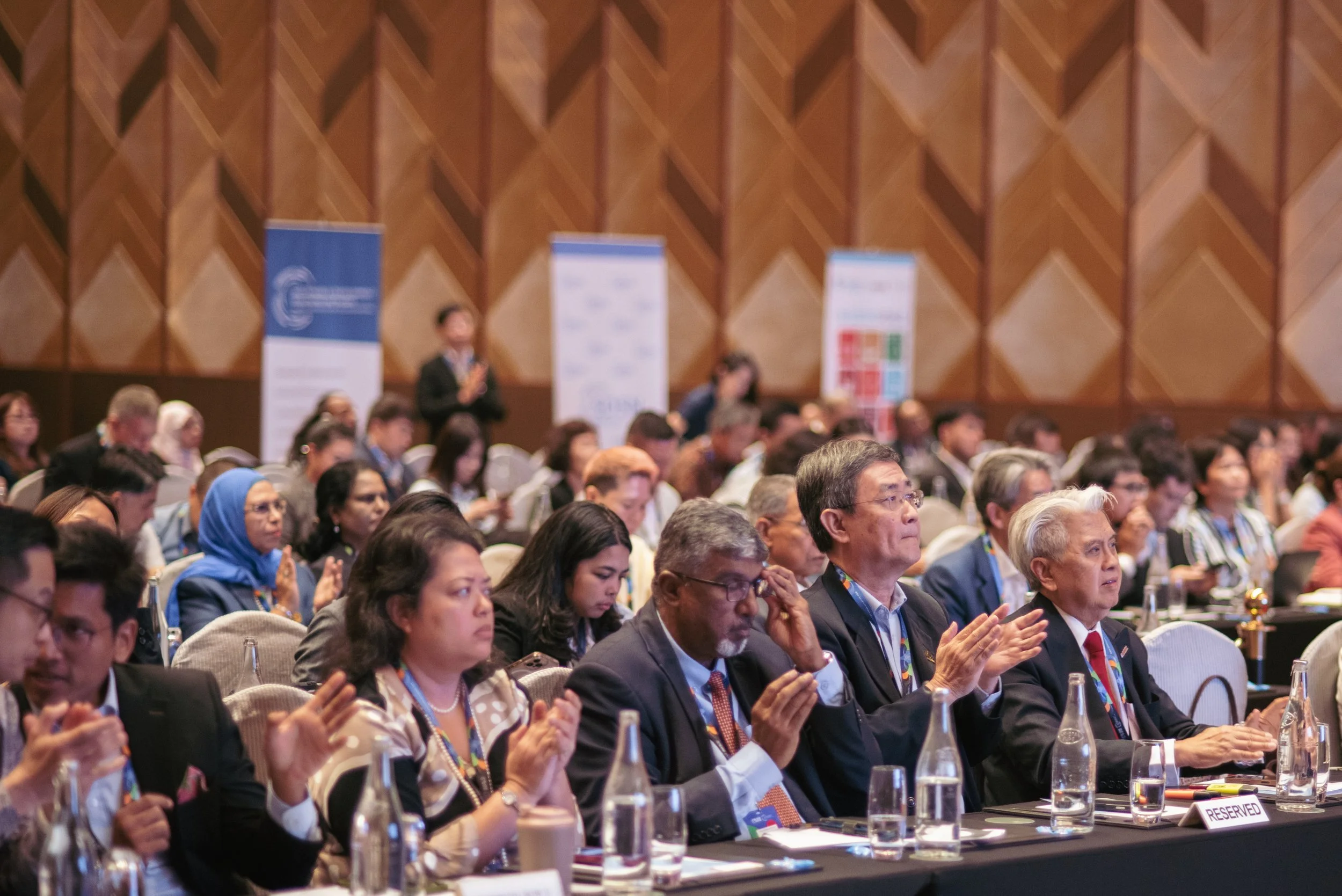
The GBA-ASEAN Conferences convene leaders from government, academia, business, and international organizations to advance dialogue and collaboration on trade, finance, sustainable development, and regional integration. Convened across the Greater Bay Area and ASEAN, the conferences provide a platform to share research, strengthen partnerships, and identify opportunities for practical regional cooperation.
How We Cooperate
why participate
ASEAN economies are seeking greater trade, technology, finance, and production cooperation with China.
GBA’s technology and production capacities will support ASEAN in improving infrastructure, education, social governance, the transition to zero-carbon energy, and regional energy interconnections.
Business Opportunity
Hong Kong will scale up Renminbi-based and dollar-based finance and act as the leading finance corridor to connect China’s vast savings for BRI outward investments, both loans and foreign direct investment.
Financial Leverage
ASEAN economies are seeking greater trade, technology, finance, and production cooperation with China.
GBA’s technology and production capacities will support ASEAN in improving infrastructure, education, social governance, the transition to zero-carbon energy, and regional energy interconnections.
Business Opportunity
Policy makers in GBA and Beijing recognize the benefits of stronger cooperation within the GBA to harness the comparative advantages of Hong Kong, Macao, and the major cities of the GBA.
The GAI will support practical and policy initiatives to create a more integrated, effective, and globally competitive GBA region.
Great Integration of GBA
We work with